


Objectives:
Pandora Bio is applying the principles of early cancer detection to the mental health space, with a
focus on college students.
Contribution:
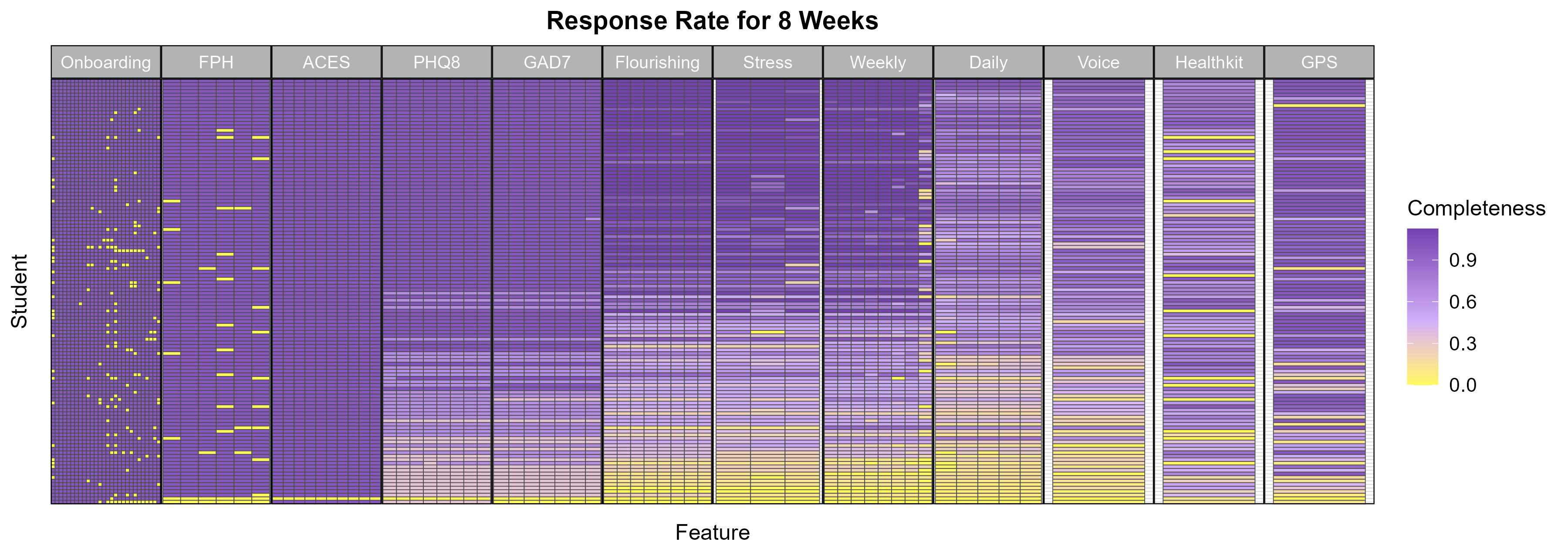
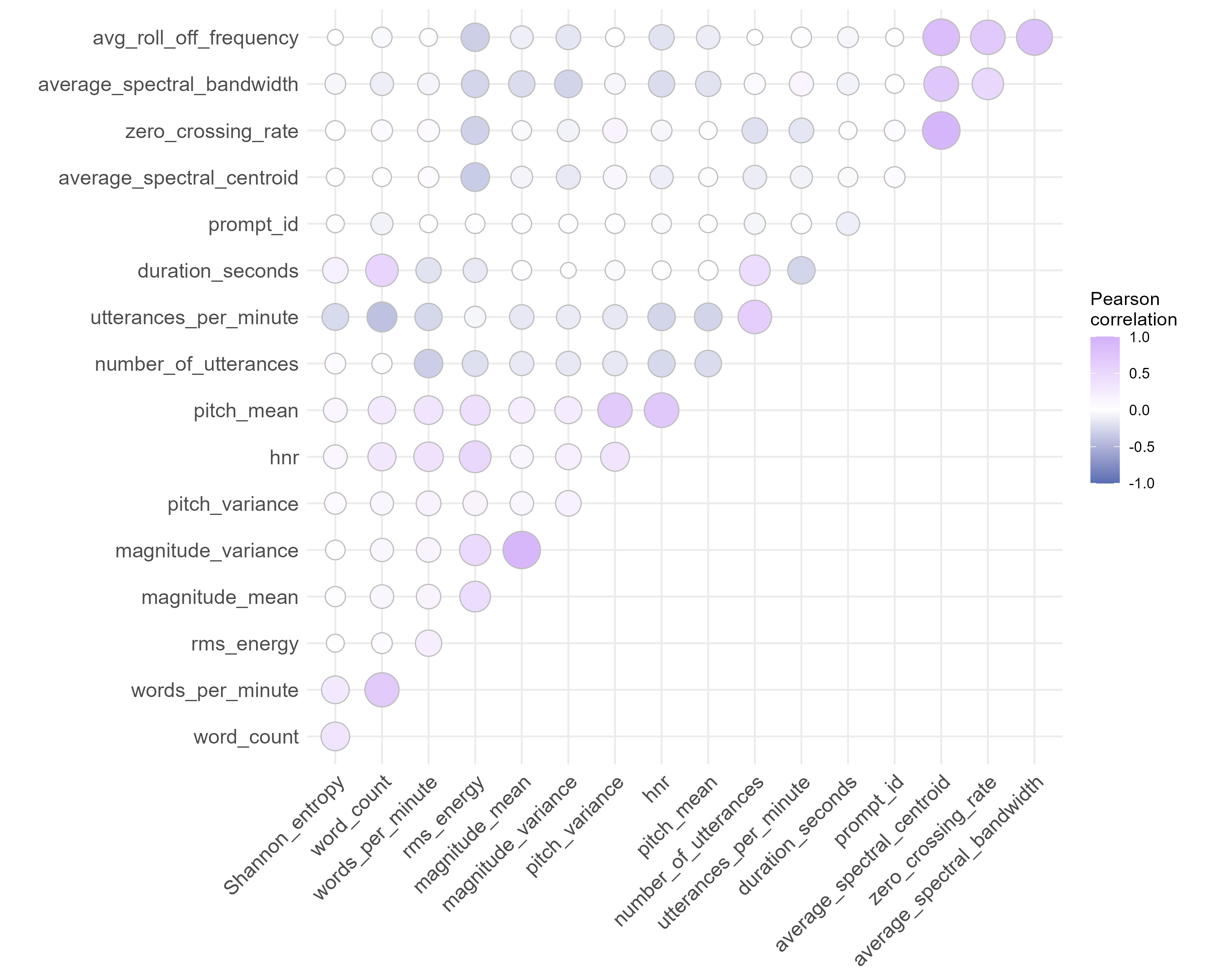
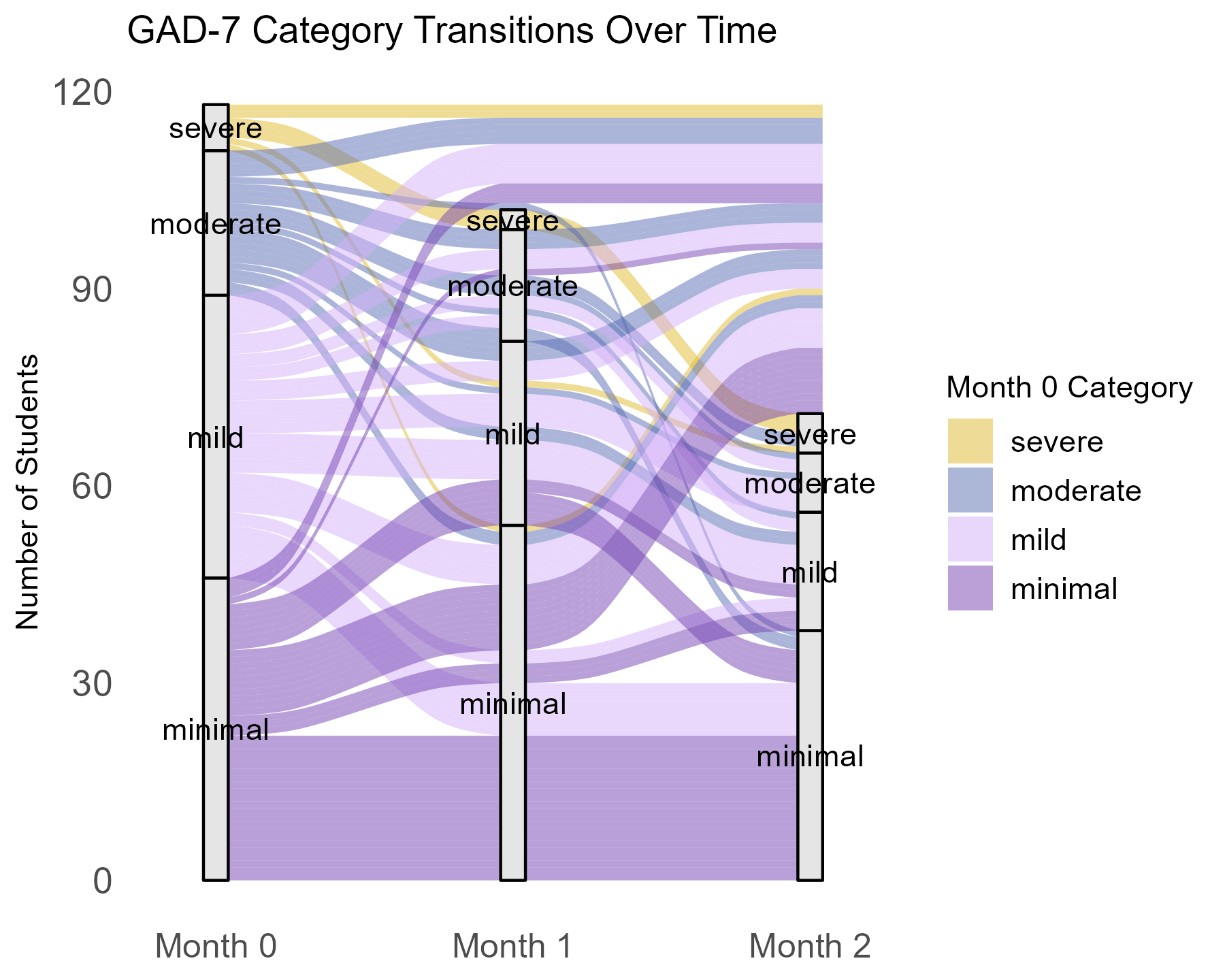
The images shown are examples of my initial analysis of a longitudinal college student mental health
data set collected by the Meet Pandora app. I consult with a team of data scientists, clinical
statisticians, behavior scientists, and software engineers to develop mental health tools for early
dectection and intervention. My contributions include feature pipeline maintenance and exploratory data
analysis, building towards training and validation of predictive models. I also contribute to data
goverance strategy.
Role: Data Science Consultant
Description:
Product development and launch of an early cancer detection WGS-based liquid biopsy LDT product, with
development towards FDA approval.
Contribution:
Contributed to analysis pipeline productization, including feature engineering, QC development, ML model
management and deployment, change management, and regulatory compliance, during pre-commercial through
initial product launch and continued improvement. Oversaw development of internal data science software
tooling.
Role: Full-time positions as Principal then Director of Data Science.
Description:
Full-time position at a clinical stage company providing personalized tumor drug-susceptibility testing
for cancer patients as
an LDT.
Contribution:
Oversaw continued development of the analysis and reporting pipeline, including change management,
pipeline derisking, and introduction of software engineering best practices. Also worked with C-suite to
systematize assay metrics and to develop and produce KPI reporting.
Role: Full-time position as Lead Bioinformatics Scientist.
Description:
Preclinical development of RNA-seq-based diagnostics for Alzheimers and lung cancer using an indicator
cell
assay.
Contribution:
Continuous improvement and maintenance of RNA-seq analysis pipeline, including normalization, feature
selection, and QC development. Improved diagnostic performance by 20%, helping to secure a $3M SBIR
grant.
Role: Full-time position as Bioinformatics Scientist.


Objectives:
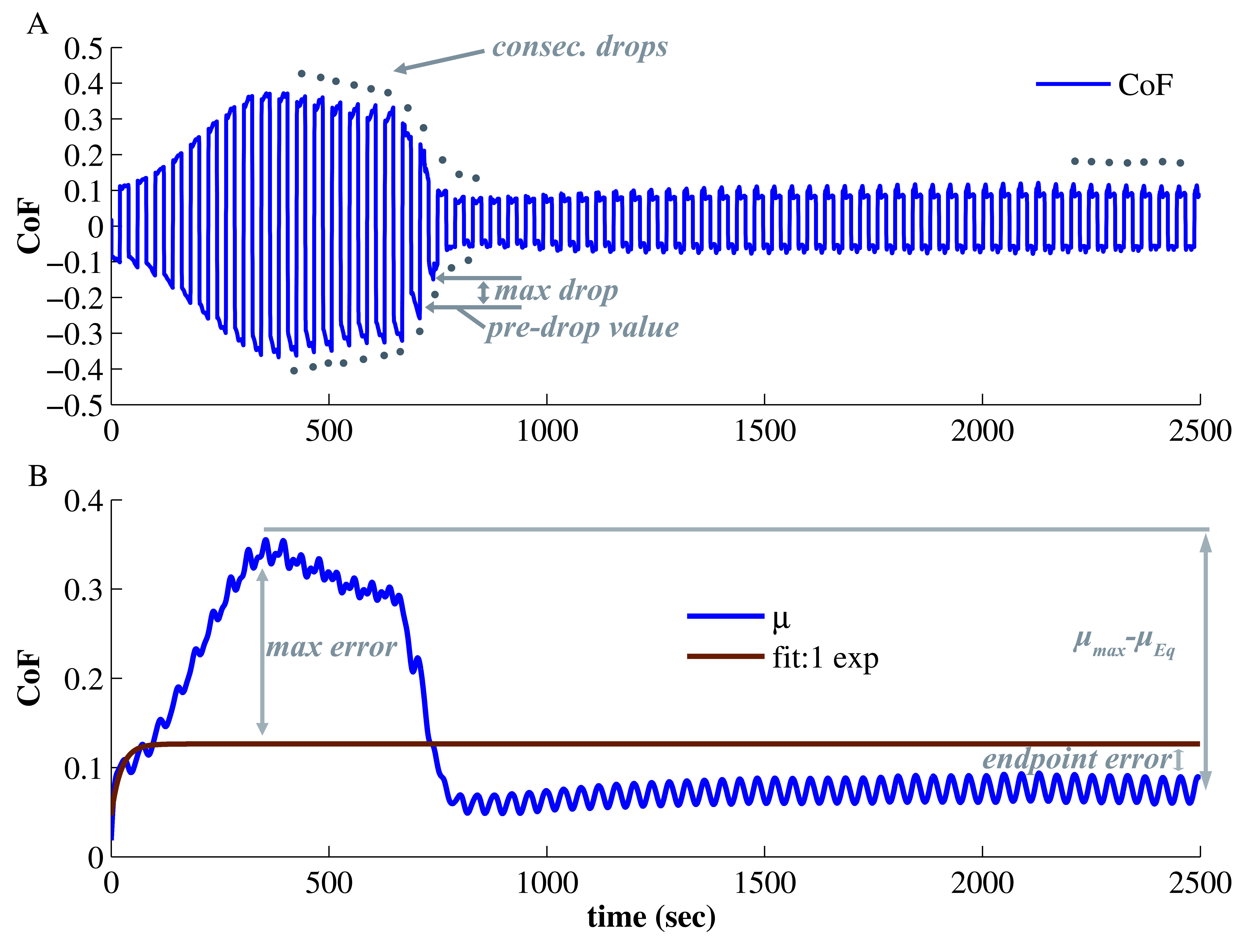
To investigate how tissue culture conditions influence the tribological (frictional-shear) strength of
engineered tissue constructs. Additionally, to develop a non-destructive method for detecting damage
caused by tribological loading through an analysis of deviations in the coefficient of friction (CoF)
over
time—potentially eliminating the need for histological evaluation.
Approach:
I utilized biphasic lubrication theory to model the expected CoF response under loading and evaluated
this
theoretical pattern compared to empirical CoF data. I then engineered features capturing deviations from
the expected behavior, and used these features to train machine learning models to identify constructs
exhibiting
tribology-induced damage. Results from a support vector machine are shown.
Description:
Custom web application for evaluating real estate agent performance.
Contribution:
Developed custom interactive Shiny App to analyze agent performance in table or graphical views. The app
includes network graph visualizations of agent relationships, as well as performance metrics such as
average days on market, list-to-sale price ratios, and transaction counts. The app allows users to
filter by geography, time period, and other criteria to identify top-performing agents and trends in the
local real estate market. Developed according to client specifications, with value-add features
suggested during development.
Role: Consultant

I offer a range of customized data science and machine learning services, including:
Looking for help in other areas? Contact me to discuss your data science and machine learning needs.
Ready to excavate actionable insights from your data?
Get in touch to start your data science journey.


